If you run a recurring-revenue business, "its worth" is not just a number you pull out when you want to sell the company someday. It is the practical answer to a much more useful question:
What is this customer, membership, offer, retention effort, or business decision actually worth to me?
That matters a lot when you are managing a gym, studio, SaaS product, agency, coaching program, or any subscription-style business with lean resources and messy data. You do not have time for theory-heavy finance talk. You need to know:
- Which customers are worth saving
- Which memberships are worth promoting
- Which accounts are quietly drifting toward churn
- Which actions are worth your team's time this week
- Which parts of the business are building durable value versus just making noise
That is where most businesses get stuck. They have data, but not clarity. A spreadsheet says one thing, the payment processor says another, and your CRM is doing its own little interpretive dance in the corner.
Jetti exists for exactly this problem. It helps lean teams turn messy uploaded data into usable retention intelligence fast, identify at-risk customers before they leave, and get ranked, explainable action plans instead of another passive dashboard no one checks after Tuesday.
The Real Meaning of "Its Worth" in Business
In business, worth means the real economic value of something in context.
Not the sticker price. Not the emotional attachment. Not the guess you made during a coffee-fueled Monday panic.
It means the measurable impact that thing has on revenue, profit, retention, growth, risk, or long-term business value.
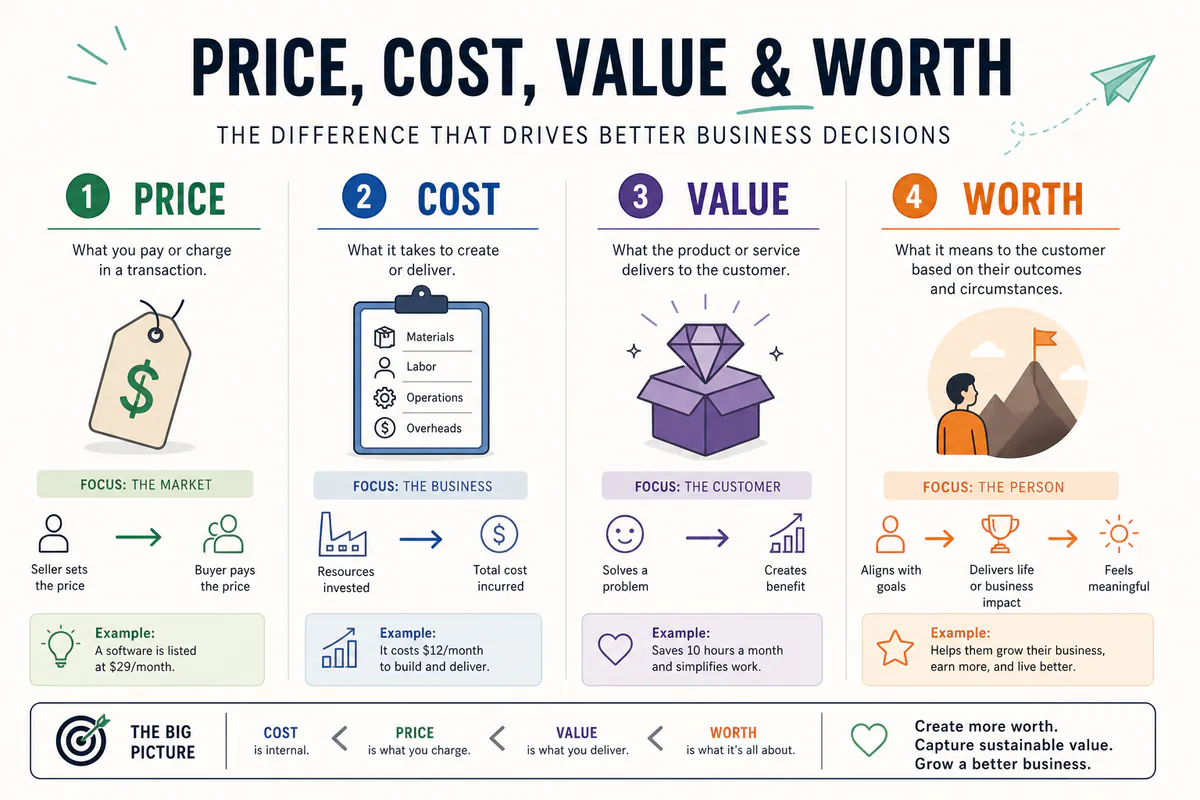
Worth is not the same as price, cost, or revenue
A lot of business owners blur these together. Bad move. Here is the cleaner version:
| Term | What it means | Example |
|---|---|---|
| Price | What you charge | A membership costs $99/month |
| Cost | What it takes to deliver | It costs you $25/month in labor, tools, support, and overhead |
| Revenue | What comes in | 100 members at $99 = $9,900/month |
| Worth | The true value created over time | A member who stays 18 months, refers friends, and upgrades is worth far more than $99 |
Why this matters more in recurring-revenue businesses
In one-off sales businesses, worth can be transactional. In recurring-revenue businesses, worth compounds.
A customer is not just worth their last payment. They are worth:
- Their likely lifetime revenue
- Their renewal probability
- Their expansion potential
- Their referral influence
- Their support burden
- Their churn risk
- Their impact on your cohort retention
So when someone asks, "What is it worth?" the smarter question is:
Worth compared to what, over what period, and with what likelihood of staying?
That is the game.
What Competitors Usually Get Right — and What They Miss
Most articles on business worth and valuation cover a few common points well:
- Revenue and profit matter
- Buyers care about risk and sustainability
- EBITDA multiples are not the full story
- A formal business valuation helps with selling, succession, financing, and planning
All true. Useful, even.
But there is a giant content gap in most of them: they talk about business worth as a future event, not an operating system for daily decisions.
That is where small recurring-revenue businesses lose money quietly.
They do not just need to know what the whole company might be worth one day. They need to know:
- Which customers are worth immediate follow-up
- Which retention plays are worth the effort
- Which membership tiers are worth expanding
- Which cohorts are weakening
- Which accounts look healthy on the surface but are actually at risk
- Which weekly reports are wasting time instead of improving outcomes
This article fills that gap.
The 5 Layers of Worth Every Small Business Should Understand
1. Customer worth
This is the total value a customer brings over time, not just the latest invoice.
Customer worth includes:
- Recurring payments
- Upsells and renewals
- Referral value
- Retention likelihood
- Margin quality
- Relationship longevity
A customer paying $49/month for 36 months is often worth more than a flashy $499 customer who disappears after one billing cycle.
2. Membership or subscription worth
Not all plans are created equal. Some attract loyal, profitable customers. Others create support chaos, cancellations, and low-margin headaches.
The worth of a plan depends on:
- Average retention
- Churn rates
- Gross margin
- Upgrade behavior
- Operational complexity
- Fit with your ideal customer
3. Retention effort worth
This is the return on the time, money, and attention you spend trying to keep customers.
A retention effort is worth doing when it:
- Prevents likely churn
- Protects meaningful revenue
- Targets the right users
- Can be executed consistently
- Produces measurable outcomes
If your team is manually chasing everyone equally, you are probably overspending effort on low-value saves and underreacting to high-value churn risks.
4. Decision worth
Every pricing change, onboarding tweak, email sequence, win-back campaign, and support process has downstream worth.
The question is not "Should we do it?" The question is "What is this decision worth if it works, and what does it cost if we delay?"
5. Business worth
This is the broader value of the company itself: how transferable, durable, profitable, and attractive it is.
For recurring-revenue businesses, business worth is heavily shaped by:
- Revenue predictability
- Churn control
- Retention quality
- Customer concentration
- Clean reporting
- Owner dependency
- Growth efficiency
A Better Way to Think About Worth: Present Revenue vs Future Value
Many owners still make decisions based on current-month revenue. That is understandable. Cash flow is real. Payroll is not paid with vibes.
But if you only optimize for today's revenue, you can accidentally destroy future value.
Example
Suppose two customers each pay $200 this month.
| Customer | Monthly Payment | Churn Risk | Expansion Potential | Likely 12-Month Worth |
|---|---|---|---|---|
| Customer A | $200 | Low | High | $2,800+ |
| Customer B | $200 | High | Low | $200–$400 |
Same revenue today. Very different worth.
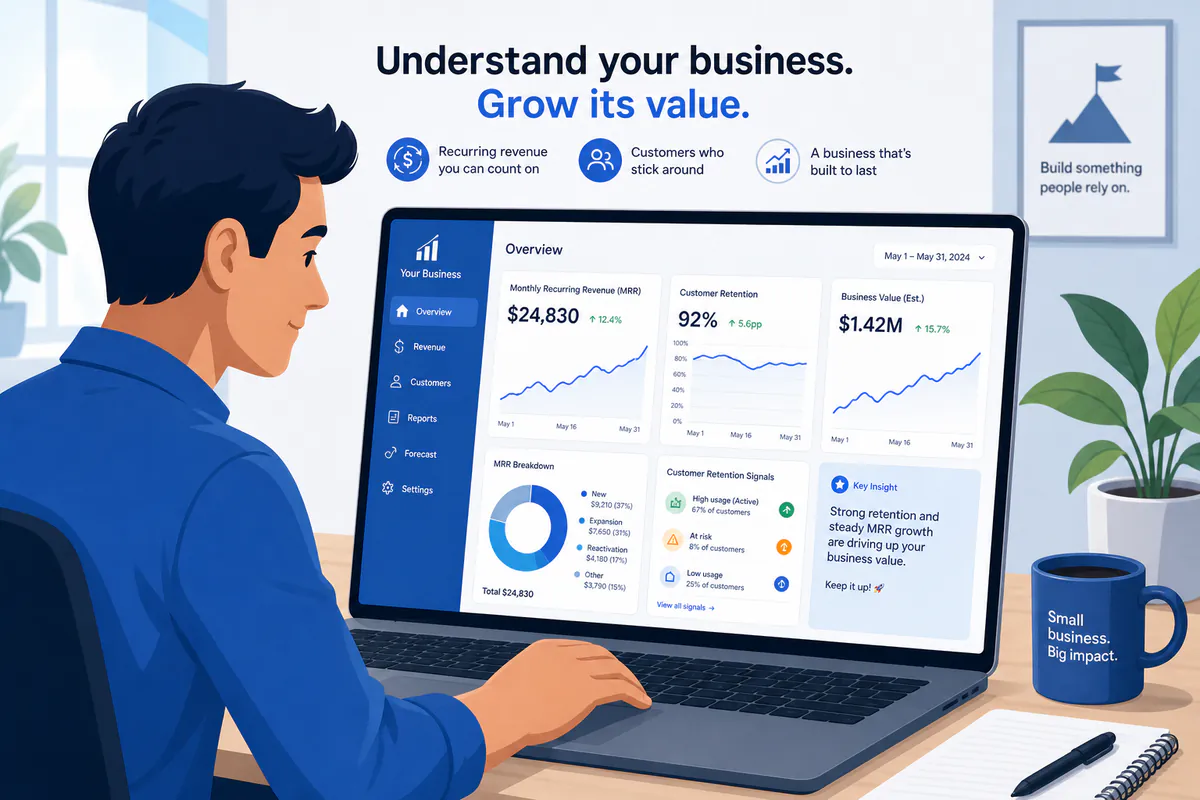
This is exactly why retention intelligence matters. Jetti helps businesses see beyond flat revenue snapshots by detecting at-risk customers, cohort patterns, and growth opportunities from uploaded customer and payment data. Instead of asking your team to stare at exports for two hours every Friday, it turns the mess into prioritized action.
How to Evaluate What a Customer Is Worth
This is where "its worth" becomes practical.
Start with the basics
A simple customer worth estimate usually includes:
Customer Worth = Revenue over time – cost to acquire – cost to serve – churn risk adjustment
You can make this more sophisticated later. The important thing is to stop treating all customers as equal.
Factors that increase customer worth
- Long tenure
- Reliable recurring payments
- Low support burden
- High renewal probability
- Expansion or upsell potential
- Referral activity
- Strong product or service engagement
Factors that reduce customer worth
- Late or failed payments
- Frequent pauses or downgrades
- High-touch service demands with low margin
- Weak engagement
- High churn risk
- Dependence on discounts to stay
A practical customer-worth framework for lean teams
Use this scoring lens:
| Dimension | Questions to ask |
|---|---|
| Revenue | How much do they pay, and how often? |
| Longevity | How long do they typically stay? |
| Risk | Are there signs they are likely to churn soon? |
| Expansion | Can they upgrade, add seats, buy more, or renew longer? |
| Effort | How much support or manual follow-up do they require? |
| Influence | Do they refer others or strengthen your brand/community? |
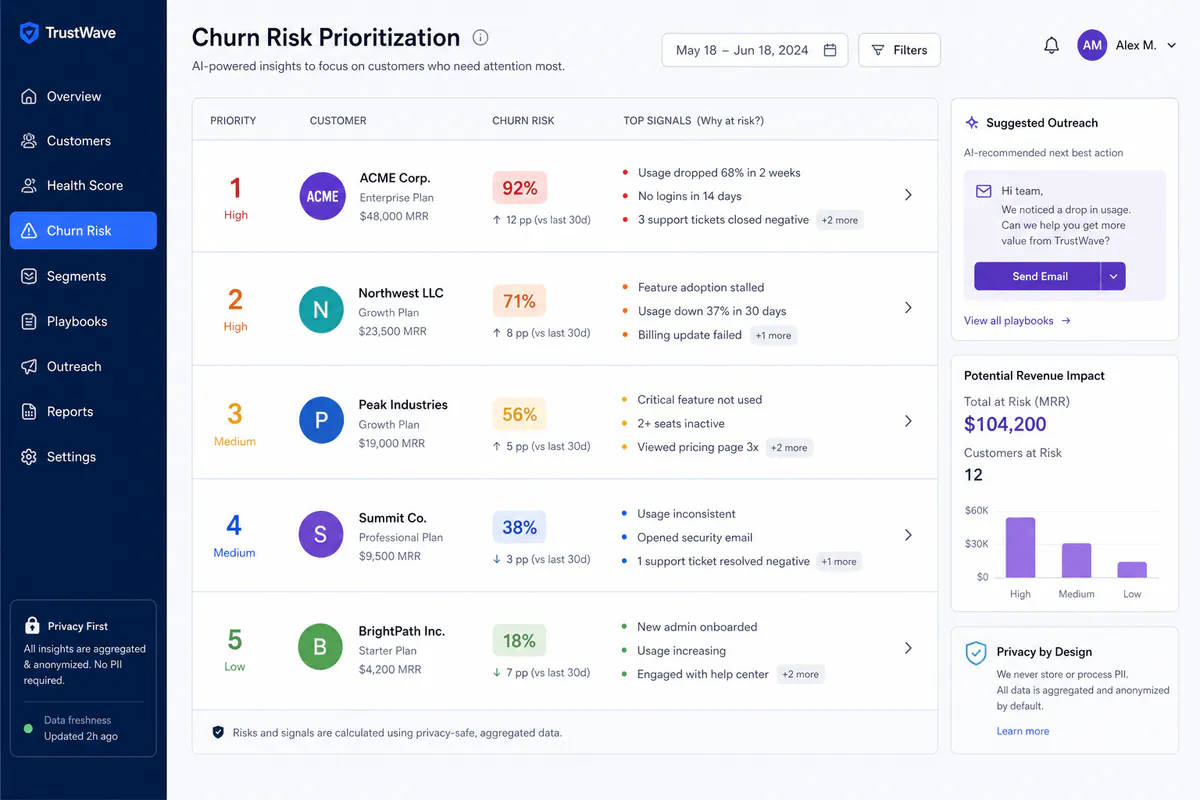
If you are doing this manually, it gets ugly fast. That is the reason Jetti is useful: it works without requiring a data team or manual data mapping, learns your business over time, and helps answer the question, "Who needs attention right now, and why?"
What Your Retention Efforts Are Actually Worth
Retention is often discussed like a virtue. It is not a virtue. It is an economic lever.
A retention effort is worth something when the expected saved value is greater than the effort required to save it.
Use this simple logic
| Scenario | Worth it? | Why |
|---|---|---|
| Sending a quick personalized email to a high-value customer showing churn signals | Yes | High upside, low effort |
| Offering a deep discount to a low-fit customer who churns every few months | Usually no | Trains bad behavior, weak ROI |
| Calling members with failed payments but strong tenure history | Often yes | Payment recovery can protect recurring revenue quickly |
| Building a giant dashboard no one acts on | No | Insight without action is theater |
The hidden trap: passive dashboards
A lot of software will gladly show you charts. Lovely charts. Tasteful charts. Charts that impress investors and do nothing for retention.
What lean teams actually need are:
- Ranked call lists
- Explainable churn signals
- Recommended next actions
- Personalized outreach drafts
- Weekly clarity, not monthly confusion
That is Jetti's angle. It focuses on decisions, not dashboard decoration.
"Improving customer retention by 5% can boost profits by 25% to 95%." — Source
That stat gets quoted a lot because the underlying point is dead-on: small changes in retention can have outsized economic impact. Especially in recurring revenue.
What a Membership or Subscription Is Worth
If you sell memberships, plans, or recurring packages, their worth depends on what they produce over time, not how attractive they look on your pricing page.
Evaluate each offer by these metrics
| Metric | Why it matters |
|---|---|
| ARPU (Average Revenue Per User) | Shows average monthly contribution |
| Retention length | Longer retention usually creates more stable value |
| Gross margin | Some plans look good at top-line but are operationally expensive |
| Upgrade rate | Indicates expansion value |
| Churn by tier | Reveals low-fit or badly positioned offers |
| Payment recovery rate | Important for recurring collections |
| Support burden | High-maintenance plans can quietly destroy margin |
A common mistake
Business owners often overvalue the highest-priced plan and undervalue the most stable one.
Example:
- Premium plan: $300/month, average retention 3 months
- Mid-tier plan: $120/month, average retention 18 months, lower service burden
Guess which one may be worth more overall? Exactly.
How Worth Shows Up in Weekly Operations
This is the part most valuation-style articles ignore.
You do not need to wait for a sale, investor pitch, or exit planning event to apply worth thinking. You can use it every week.
Ask these questions regularly
- Which customers are most worth saving this week?
- Which accounts are most likely to churn next?
- Which outreach actions have the highest expected payoff?
- Which cohorts are becoming less healthy?
- Which plan types create the strongest long-term value?
- Which trends are hurting future recurring revenue before they show up in P&L pain?
What this looks like in practice
A smart weekly review is not a 40-tab spreadsheet marathon. It is more like:
- Upload your latest business data
- Let the system clean and structure it
- Identify at-risk customers and revenue clusters
- Prioritize outreach by expected value
- Draft personalized follow-up
- Measure what changed
That is the workflow Jetti is built for. It saves significant time on weekly reporting and retention planning, especially for businesses that do not have analysts sitting around doing manual joins and CSV archaeology.
Business Worth vs Customer Worth: Why You Need Both
A healthy business is not just a pile of individually valuable customers. It is a system that reliably creates, keeps, and grows valuable customers.
Customer worth answers:
- Who should we save?
- Who should we grow?
- Who is most at risk?
- Which relationships matter most right now?
Business worth answers:
- Is this company durable?
- Is revenue stable and predictable?
- Can the business grow without breaking?
- Is retention strong enough to support expansion?
- Is the business dependent on one owner or one giant customer?
If your customer-level signals are weak, your business-level value usually weakens too.
That is why recurring-revenue intelligence matters for more than day-to-day retention. It improves the company's underlying quality, which directly affects how attractive and resilient the business becomes over time.
What Makes a Business "Worth More" in a Recurring-Revenue Model
Whether or not you ever formally sell the company, these factors increase business worth:
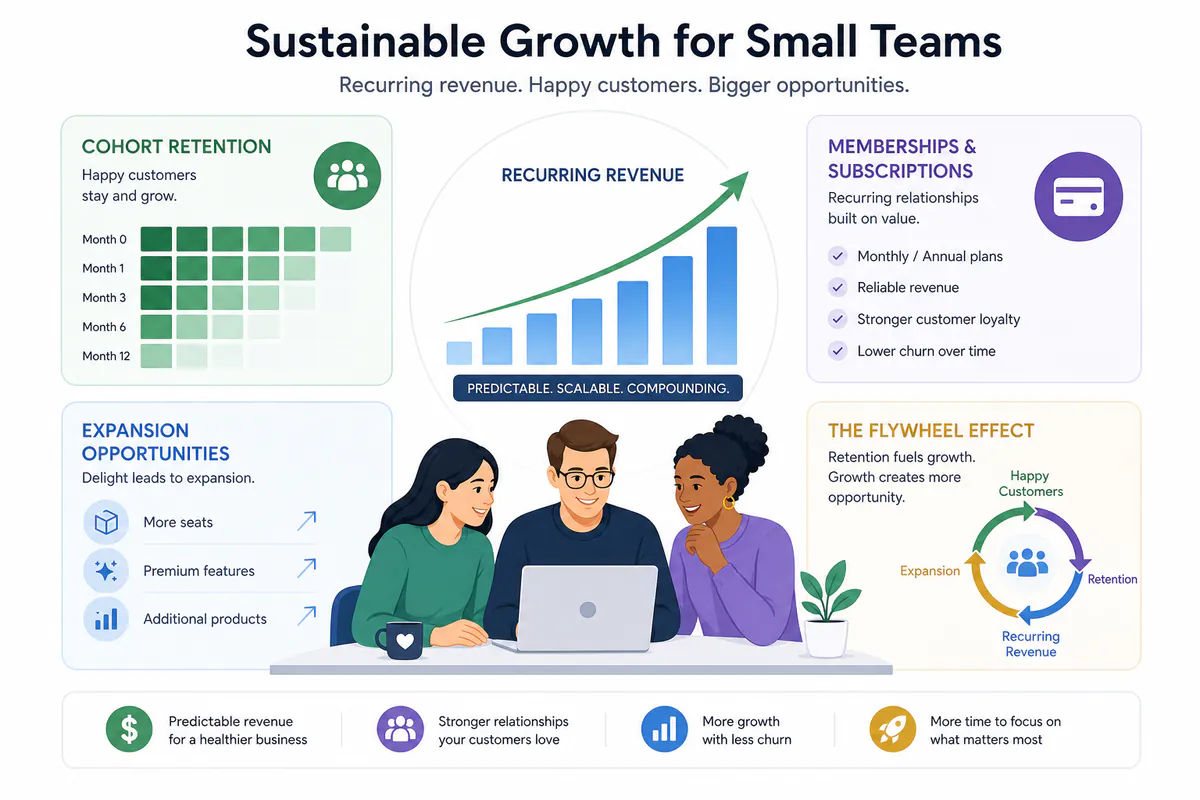
1. Predictable recurring revenue
Predictability reduces risk. Buyers, lenders, and owners all love fewer surprises.
2. Low churn and strong retention
Retention is the backbone of recurring-revenue value.
3. Diversified customer base
Heavy reliance on one customer, contract, or segment creates fragility.
4. Clear customer economics
If you cannot explain customer lifetime value, payback, churn by cohort, and expansion patterns, that is a credibility problem.
5. Clean data and reporting
Messy financials and fragmented customer records make everything harder: forecasting, retention planning, diligence, and strategy.
6. Low owner dependency
If everything depends on you personally, that lowers transferability and creates risk.
7. Actionable systems
A company that can detect issues early and respond consistently is simply worth more than one running on instinct and spreadsheet folklore.
Why "Its Worth" Is Really About Optionality
Here is the strategic version.
When you understand worth clearly, you gain options.
You can:
- Save the right customers before they leave
- Spend team time where it matters most
- Improve retention without hiring a full analytics team
- Make smarter pricing and membership decisions
- Spot stronger growth segments
- Build a business that is more resilient and more sellable
In other words, worth is leverage.
Without clarity, you react late. With clarity, you act early.
A Simple Formula for Deciding if Something Is Worth It
When you are evaluating a retention campaign, save offer, membership tweak, or outreach effort, use this quick filter:
The "worth it" formula
Expected Value = Revenue protected or gained × likelihood of success – cost of effort
If expected value is clearly positive, do it. If it is vague, tiny, or based on wishful thinking, probably skip it.
Example
A customer is likely worth $1,800 over the next year if retained.
- Probability your outreach saves them: 40%
- Time and labor cost of outreach: $30
Expected value = $1,800 × 0.40 – $30 = $690
That is worth it.
Now imagine a customer worth $90 total with the same outreach cost. Very different story.
This is why ranked prioritization matters so much. Jetti helps teams focus on the highest-value retention actions first, instead of treating every cancellation signal like a five-alarm fire.
The Data Problem Behind Most "Worth" Mistakes
Let's be blunt: many small businesses do not fail to understand worth because they are bad at strategy. They fail because their data is too messy to trust.
Common issues:
- Customer names differ across systems
- Plans are labeled inconsistently
- Payment records are incomplete
- CRM and billing tools do not align
- Teams rely on manually updated spreadsheets
- No one has time to normalize anything properly
So even if the owner wants to think strategically, the raw material is chaos.
Jetti's practical advantage is that it turns messy uploaded data into usable insights quickly, without forcing teams into long setup projects or requiring custom data mapping just to answer basic retention questions. It is also privacy-first by design, with masked names, encryption, and careful handling of customer data.
That matters when you want intelligence without creating a new headache.
Worth, Privacy, and Trust
There is another layer of worth that rarely gets mentioned: trust worth.
If you are handling customer data, your system needs to be useful and responsible. A tool that finds churn risk but treats customer information carelessly creates a different kind of business risk.
That is why privacy-by-design matters:
- Masked names when possible
- Encrypted data handling
- Clear controls
- Minimal exposure
- Explainable outputs rather than black-box panic
For recurring-revenue businesses, trust is not a side note. It is part of the value equation.
The Smartest Way to Increase Worth Over Time
If you want a stronger business in 12 months, do not obsess only over valuation multiples. Improve the drivers of worth.
Focus here
| Priority Area | Why it increases worth |
|---|---|
| Retention quality | Protects future revenue and improves predictability |
| Cohort analysis | Reveals where value is strengthening or eroding |
| At-risk customer detection | Lets you act before churn becomes revenue loss |
| Personalized outreach | Increases save rates without generic spam |
| Offer optimization | Improves membership mix and margin quality |
| Operational simplicity | Reduces team drag and support burden |
| Reporting efficiency | Saves hours and improves decision cadence |
"In the beauty box subscription industry, customer lifetime value (LTV) benchmarks range from $960 to $3,600." — Source
The exact number will vary by industry, of course, but the takeaway is powerful: in recurring-revenue businesses, a single customer can be worth far more than one monthly payment suggests. Losing one "small" account may actually mean losing years of future value.
So, What Does "Its Worth" Really Mean?
Here is the plain-English answer:
In business, its worth means the true value of something based on what it contributes over time, how sustainable that value is, and how much risk comes with it.
For recurring-revenue businesses, that means looking beyond one payment, one report, or one month.
It means asking:
- What future revenue is attached to this customer?
- How likely are they to stay?
- What action should we take now?
- Which parts of the business are creating durable value?
- What is actually worth our limited time and energy?
That is the shift from reactive operations to strategic growth.
Final Verdict: Worth Is Not a Finance Word. It Is an Operating Discipline.
If you run a lean recurring-revenue business, understanding worth is not optional. It is how you protect revenue, prioritize action, and avoid making expensive decisions based on incomplete signals.
The best operators do not just know what happened. They know what matters next.
That is exactly where Jetti fits.
It helps you:
- Identify at-risk customers before they leave
- Turn messy uploaded data into clear, usable insights fast
- Save hours on weekly reporting and retention planning
- Get ranked, explainable action plans instead of passive dashboards
- Draft personalized customer outreach
- Spot cohort patterns and growth opportunities
- Operate without a data team
- Improve over time as the system learns your business
- Get strong ROI without hiring extra staff
- Protect customer information with privacy-first design
If you want to understand what your customers, memberships, and retention efforts are really worth — and act on that knowledge before revenue slips away — Jetti is the smarter way to do it.
FAQ
In business, worth means the true economic value of something based on its revenue impact, profitability, retention potential, and risk over time. It goes beyond price or cost and asks what a customer, decision, offer, or business is actually worth in context.
There is no fixed answer because sales alone do not determine value. A business with $500,000 in sales could be worth more or less depending on profit margins, customer retention, churn, owner dependency, growth potential, and how predictable the recurring revenue is.
If "makes $100,000 a year" means profit, value often depends on the quality and stability of those earnings, not just the amount. Buyers or advisors usually consider risk, transferability, recurring revenue strength, and growth outlook before applying any valuation multiple.
Worth truly means real value over time, not just what something costs or what someone hopes it is worth. In business, that includes future revenue, sustainability, effort required, and the likelihood that value will continue.